Elematter · 3 min read
Elematter: Build an Elemental Defense That Lasts
Elematter is a tower defense game with a fixed winding route and a limited construction budget. Your job is to stop twenty waves before they consume all thirteen points of matter. The opening is paused, so use that time to study the route and spend deliberately. A strong first wave does not guarantee a strong fifth wave: different enemy elements and bosses demand a broader defense.
Play ElematterSet up before pressing Play
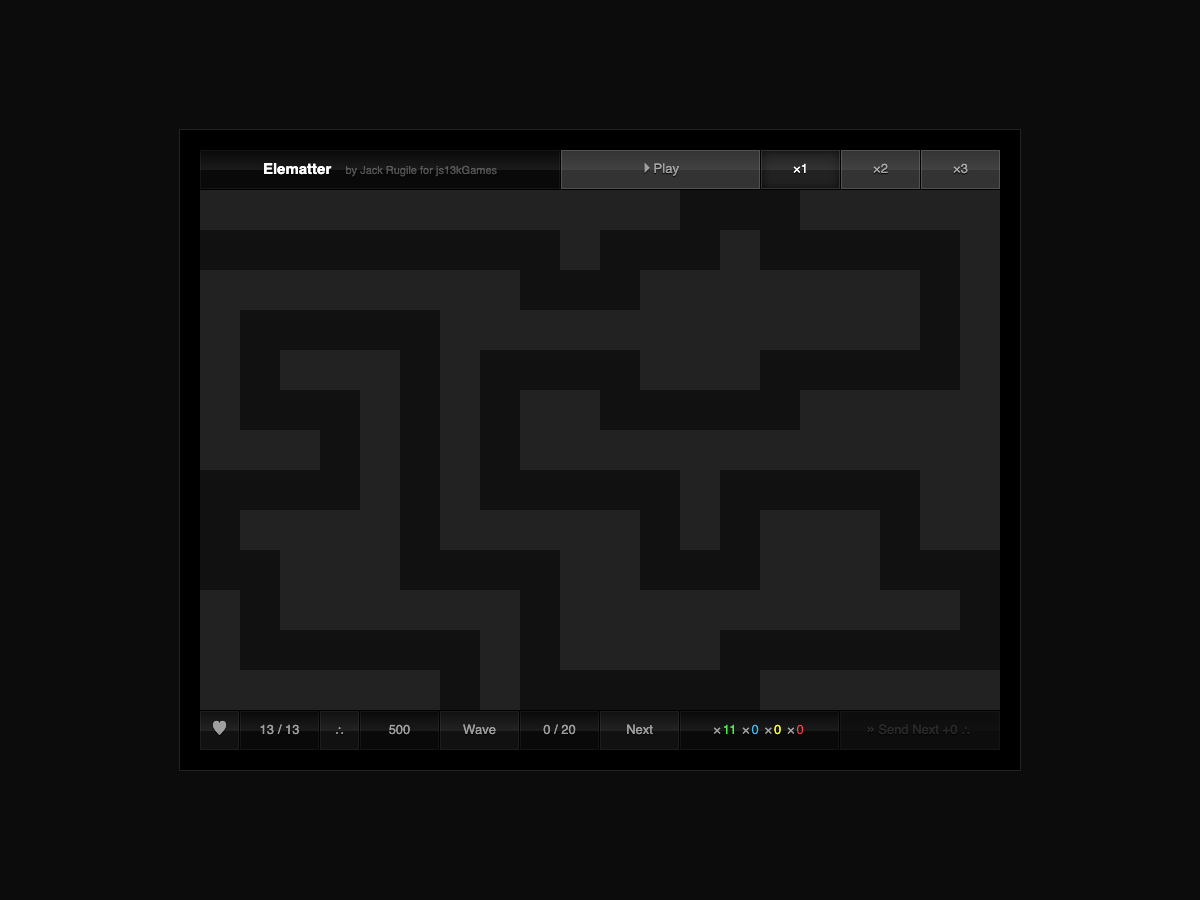
Click an empty tile beside the route to open the build choices, then choose a tower. The starting budget is 500 fragments. Earth costs 200, Water 300, and Air and Fire each cost 250. Path tiles cannot hold towers. Look for a bend where one tower can cover enemies for several moments, preferably across more than one nearby section of road.
The first wave contains eleven Earth enemies. Fire is a useful opening counter, and two Fire towers fit the initial budget exactly. This gives an understandable first experiment, but avoid spending every later fragment on the same element. Inspect the next-wave preview before expanding.
Match elements and extend coverage
The advantage cycle is Earth against Air, Water against Fire, Air against Water, and Fire against Earth. A favorable matchup adds fifty percent damage. Water towers also slow enemies; their target selection differs from towers that prioritize the enemy furthest along the route. Use slowing support where another tower can keep attacking the delayed target.
Click an existing tower to inspect its upgrades or reclaim option. Each tower has two upgrade stages. Upgrades concentrate power in a useful location, while a new tower covers a section your current defense misses. Reclaiming returns seventy-five percent of your investment, rounded up, so correcting a poor placement still costs resources.
Control the pace of the defense
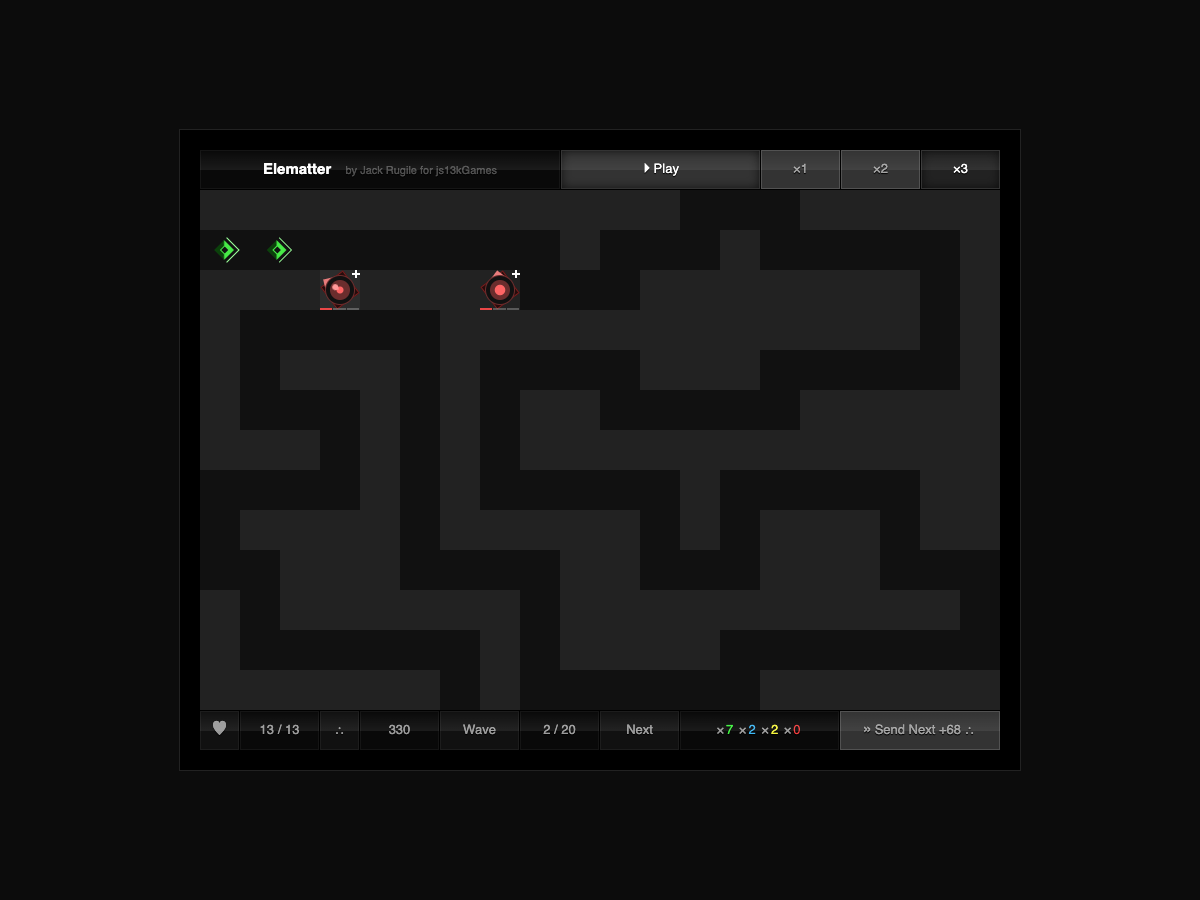
Play also lets you pause, and the speed buttons offer one, two, or three times normal speed. Build and inspect at a comfortable pace before accelerating. Send Next brings the following wave forward and awards extra fragments; it also puts more enemies on the road while the previous wave may still be alive.
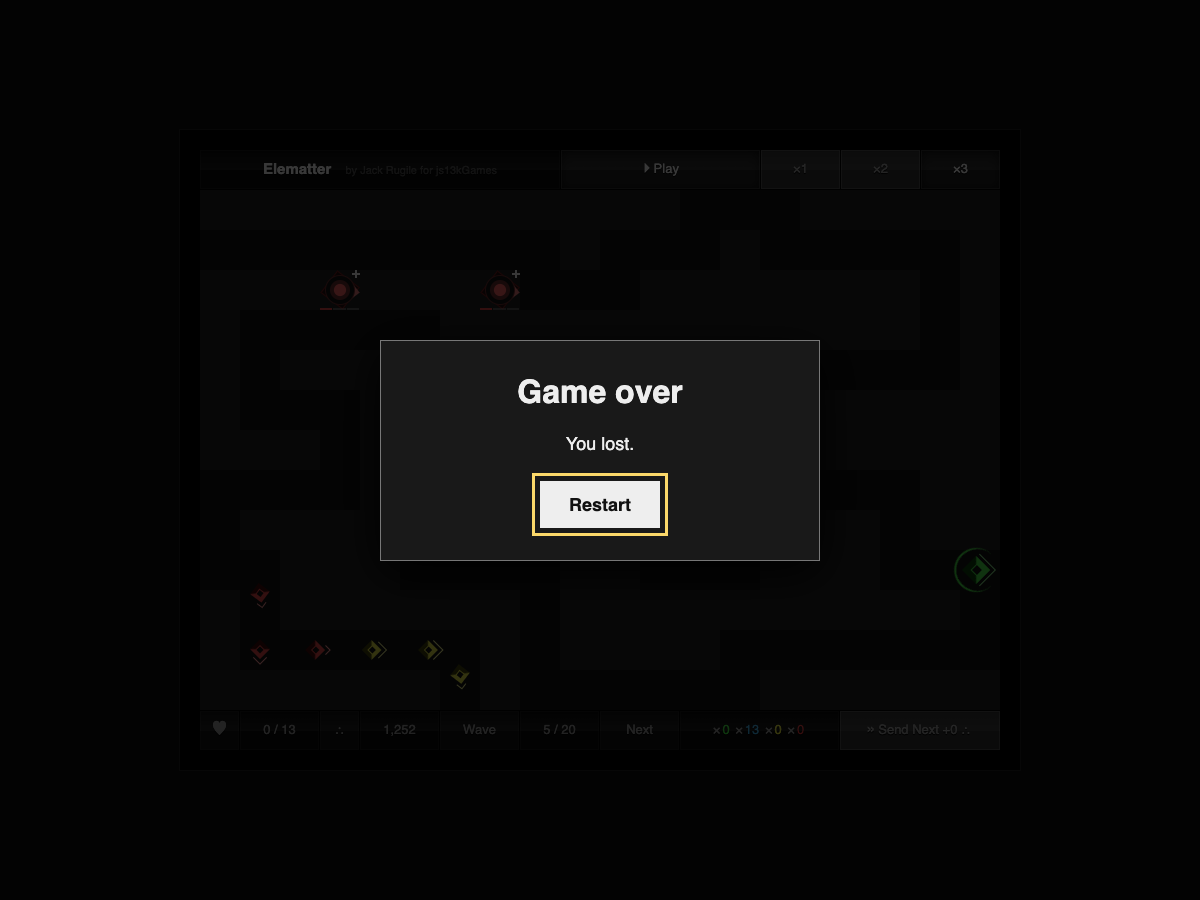
During this run, the opening defense survived the first waves, but early sends created overlapping pressure. The round ended at wave five when escaped enemies exhausted all thirteen matter. That is a useful warning against equating a growing fragment total with a safe defense. Boss waves arrive at five, ten, fifteen, and twenty.
- Start at normal speed and watch which stretch lets enemies escape tower range.
- Spend earned fragments on the next matchup or on a proven firing position.
- Use Send Next only after checking the remaining enemies and your available damage.
Finish a round and begin again
The formal Game over card appears when matter reaches zero. Its Restart button begins a fresh paused round with thirteen matter, five hundred fragments, and no towers. Clearing the complete wave sequence is the victory objective; merely reaching a new wave is progress, not a completed defense. There is no saved campaign to resume after refreshing.
Quick tips
- Pause before making several purchases.
- Read enemy elements rather than judging danger only by how many enemies are visible.
- Keep some coverage later along the path so a survivor is not automatically a lost life.