Tower Game · 3 min read
Tower Game: Build a Stable Stack and Protect Your Three Lives
Tower Game turns one simple action into a timing challenge: release a moving floor so that it lands on the tower below. A successful landing adds a floor and points. A missed landing costs one of your three hearts. There is no fixed final floor, so an opening goal of five successful placements gives you a useful target before you chase a larger score.
Play Tower GameStart with the release timing
Choose Start building, then click or tap inside the game to release the current floor. You do not need to aim the pointer at the tower; the important decision is when you click. The first floor provides a forgiving introduction. Watch it finish falling before looking for the next suspended floor.
Do not click repeatedly while a floor is already falling. Give each placement time to resolve, then look at the new top of the stack. A release is followed by a drop, so judging only the instant when the floor passes the middle of the screen can produce an unexpected landing.
- Start the run and release the first floor with one click.
- Wait for the floor counter and score to increase.
- For the next floor, follow the swing and release near alignment with the current tower top.
Follow the tower, not a fixed screen position
After every successful landing, use the uppermost floor as your reference. Slightly offset placements can shift the useful landing area, and the stack can sway as it grows. Repeating the same timing or clicking at the same visual center does not guarantee the next success.
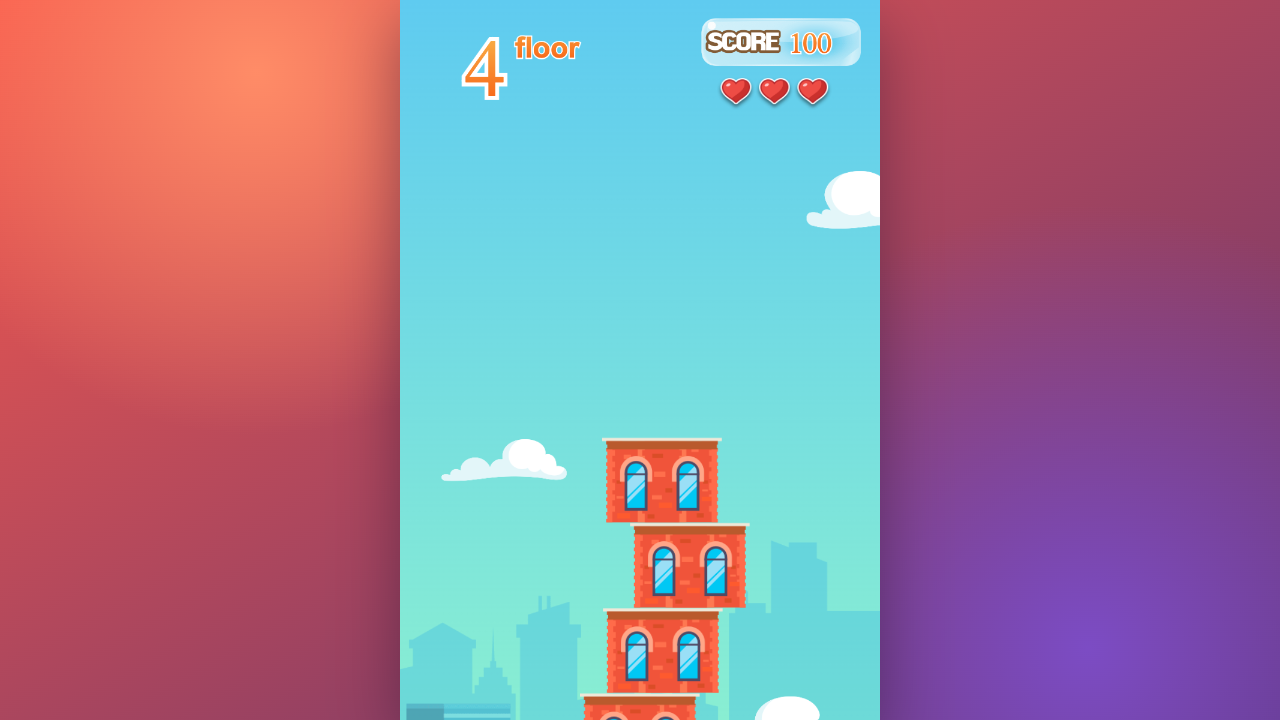
The pictured run reached four floors with all three hearts still available, then continued to five floors. Treat this as an achievable beginner sequence rather than a perfect-placement demonstration. The score rose by 25 for each of those ordinary successful landings.
Build consistency before chasing Perfect bonuses
An ordinary successful placement awards 25 points. A Perfect placement starts at 50 points, and consecutive Perfect placements increase that reward by another 25 each time. An ordinary success or a miss breaks the consecutive Perfect sequence.
The safest learning approach is to prioritize broad, reliable overlap. Once you can place several floors in a row, narrow your timing window and compare the landing with the previous floor. Avoid rushing the next release simply because the preceding one looked good; each swing deserves a fresh check.
Understand a miss and the end of a run
A floor that fails to settle onto the stack can tip or fall away. Wait until that motion finishes and the heart count updates. The existing tower and score remain after an individual miss, giving you another chance with the next floor.
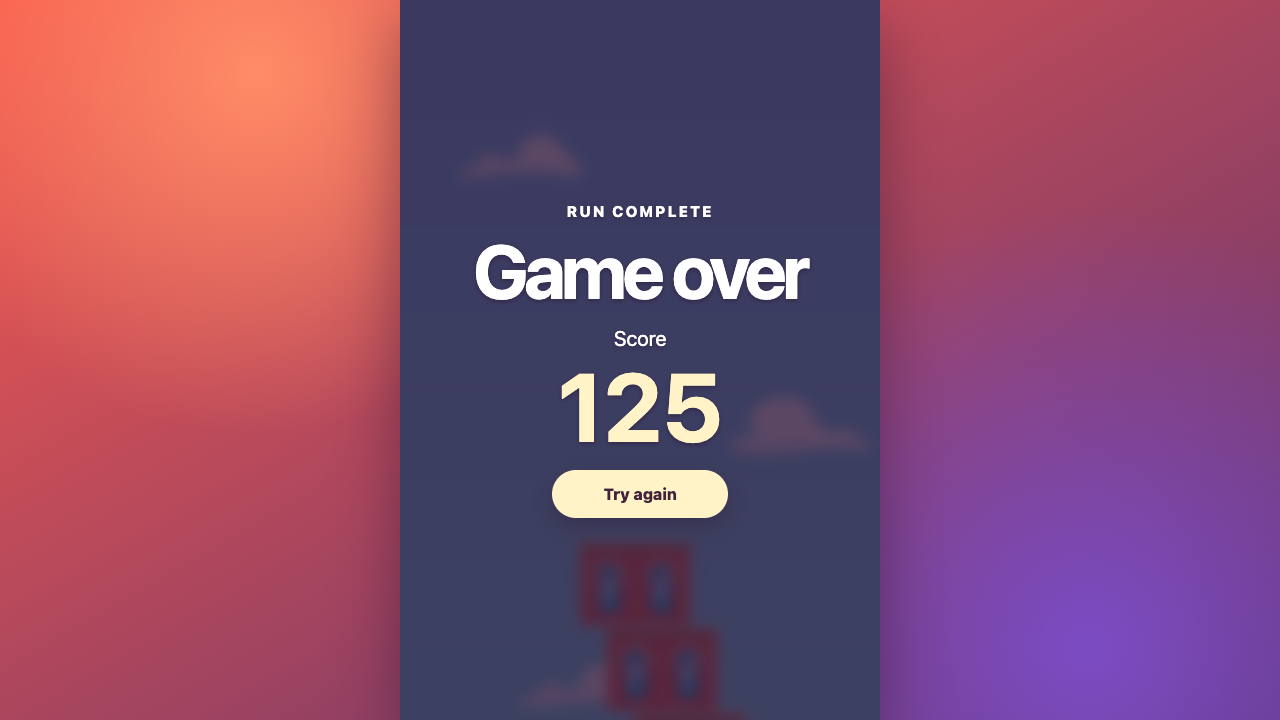
Three misses end the run. This run finished at five successful floors and 125 points, with the Game over panel showing the final score. That is a completed run, not a maximum height or the end of a campaign.
Restart with a simple practice target
Choose Try again to return to the start screen, then select Start building for a new tower. The score, successful-floor count, and misses reset. The current stack is not a saved construction that you can resume after restarting.
For your next attempt, aim to match five floors with fewer rushed releases. Once that feels repeatable, add a Perfect placement as your next objective instead of trying to maximize height and bonus chains at the same time.
Quick tips
- Watch the current top floor before each release.
- Wait for a landing or miss to finish before acting again.
- Use the hearts as a reminder to slow down after an error.